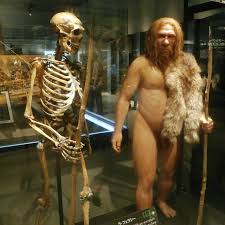
The remains of six ancient skeletons trapped in rock have preserved human skin belonging to two-million-year old fossils. Anthropologists discovered the skin from an early human species in a cave near Johannesburg, in South Africa.
The tissue, thought to come from the species Australopithecus sedib, could be the oldest example of skin ever found and could reveal important details about early human life.
Experts believe they have also found the remains of early humans' last meals in the skeletons' teeth.
The finds follow excavation of the cave site following the discovery of the remains of a 4' 2" male skeleton in 2008.
But, apart from skin, how is modern man different from prehistoric man?
There is no time more shrouded in mystery than prehistory. Because it all happened before the invention of writing, our ancestors weren’t able to leave many clues about how they lived during those undated times. The difference in language and before the invention of punctuation to make sense of writing, out ancient ancestors wouldn't be able to solve this question:
Write the following on your answer sheet and, by inserting two full-stops and a question mark, make the meaning clear.
That that is is that that is not is not is that not so
Many species on our planet live in social groups, from the great apes to fish and insects. The fact that humans do too is not of note.
The tissue, thought to come from the species Australopithecus sedib, could be the oldest example of skin ever found and could reveal important details about early human life.
Experts believe they have also found the remains of early humans' last meals in the skeletons' teeth.
The finds follow excavation of the cave site following the discovery of the remains of a 4' 2" male skeleton in 2008.
But, apart from skin, how is modern man different from prehistoric man?
There is no time more shrouded in mystery than prehistory. Because it all happened before the invention of writing, our ancestors weren’t able to leave many clues about how they lived during those undated times. The difference in language and before the invention of punctuation to make sense of writing, out ancient ancestors wouldn't be able to solve this question:
Write the following on your answer sheet and, by inserting two full-stops and a question mark, make the meaning clear.
That that is is that that is not is not is that not so
Many species on our planet live in social groups, from the great apes to fish and insects. The fact that humans do too is not of note.
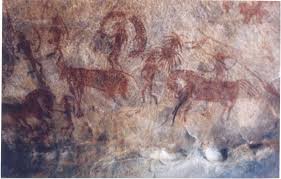
Of course, we are more interested in the sheer complexity of the social system humans exist in. So how do people living in bustling cities differ from their distant, cave-dwelling ancestors? Prehistoric humans lived mostly in small family groups to pool resources and increase their survivability. As populations grew, more and more people grouped together to maximize resource utilization and provide adequate safety. Those early societies began changing with time. Rules and customs arose. In addition to the pressures of survival and passing on their genes, people focused on the laws of the societies they lived in. With time, the challenges people faced in their social lives became internalized, and successful behaviors and traits were passed on to offspring.
Because of the millennial gap between us and our prehistoric ancestors, it is only safe to assume that there would be an insurmountable language barrier between us. After all, many of us believe that early humans only spoke in grunts. The idea that they didn’t have a well-structured language portrayed in films and TV commercials. One thing many of us are sure of—if our ancestors spoke to us today, we wouldn’t understand a single thing they said.
And now comes the answer to the simple question for the English-speaking modern man:
That that is is. That that is not is not. Is that not so?
How did you do?
Because of the millennial gap between us and our prehistoric ancestors, it is only safe to assume that there would be an insurmountable language barrier between us. After all, many of us believe that early humans only spoke in grunts. The idea that they didn’t have a well-structured language portrayed in films and TV commercials. One thing many of us are sure of—if our ancestors spoke to us today, we wouldn’t understand a single thing they said.
And now comes the answer to the simple question for the English-speaking modern man:
That that is is. That that is not is not. Is that not so?
How did you do?



 RSS Feed
