Francene - Views on news
  • BLOG
  • About
  • Contact

How long do you expect to live?

4/30/2015

11 Comments

 
Picture
Research from the Lancet indicates men are catching up to women when it comes to life expectancy in the UK. By 2030 men will be living 85.7 years on average, just two years fewer than women.

In 1981 men lagged behind women by six years.

A 60-year-old living 100 years ago would have been considered a frail person. However, nowadays they might be viewed as middle-aged, living healthy and happy lives.

I recall reading books about that era where the old mother called for food from the confinement of her bed. Nowadays, most people remain active despite their disability. Like me. I drag myself from room to room to maintain order in my home. Every day, I force myself to take a walk outside with my rollator. Only then, do I appreciate the wind on my face and the birdcall. I don't take pain relief, believing it is best to accept whatever comes and try to adapt like bamboo swaying before the wind. Stiff branches snap.

Though life expectancy is shown to be improving for both sexes, it comes at the cost of widening inequalities between deprived and affluent areas. The researchers, from Imperial College London, predict by 2030 men will be living 2.4 years longer than official estimates from the Office of National Statistics suggest. Women gain an extra year.

Click here for your life expectancy calculator. It's American, but values can be worked out for other countries.  Here's a stone to pound calculator.

Picture
I took the test and found that my life anticipation is due to end. Hehe. I'm 73 years and I'm expected to live another .2 years, which is about now in April, 2015. Well, we'll see about that!

As an aside, all the questions on health were in my favor. The only drawbacks for me were concern about my husband's health, his smoking, and him, at the age of 76, driving me around. So, my husband will be the death of me.

Life expectancy has risen in developed countries from about 47 in 1900 to about 80 today, largely due to advances in curing childhood diseases. But those longer lives come with their share of misery. Age-related chronic diseases such as heart disease, cancer, stroke and Alzheimer’s are more prevalent than ever. Why would anyone want to go on living in a pain-riddled body?

“A lot of people spend their last decade of their lives in pain and misery combating disease,” says Craig Venter, San Diego based pioneering biologist and billionaire entrepreneur who raced to sequence the human genome. “I think it is possible to begin to do more about that than we are doing.” Venter, 68, announced his new company, Human Longevity, to promote healthy ageing using advances in genomics and stem cell therapies in March 2014.

A lot of people might consider having their mind transferred to a healthy avatar, as one scientist is working toward, so 'they' can live forever, but they must not believe in an afterlife. I look forward to the next stage of my soul's growth.

In the end, a healthy lifestyle has been identified as the key to staying fit and well into old age.

And so comes the question: How long do you anticipate living?

11 Comments

What does a mirror really tell us?

4/29/2015

38 Comments

 
A mirror is a fairly recent invention. Primitive people must have seen their reflection in the dark, still water of a stream or pool. Imagine the shock when a face seemed to peer back at them from below the depths. Of course, everything reflects in an opposite way, but not having seen themselves before, they wouldn't know their mole should have been under their left eye, not their right.

Here's a question for you:

When seen in a mirror, which of the following words printed in capital letters will look the same as when viewed directly?

MAN TOOT DEED

Picture
A bit of information to expand your interest in mirrors: Man (or woman) made the earliest mirrors from polished stone and black volcanic glass obsidian. Some examples have been found in Turkey dating back at least 6000 years. The Ancient Egyptians used polished copper for reflecting their image, and often the round face of the mirror would be embellished with ornamentation. The Ancient Mesopotamians also produced polished metal mirrors. Polished stone mirrors were known in Central and South America from about 2000 BC. In China mirrors were made from metal alloys, a mixture of tin, copper, and polished bronze to made a reflective surface. Metal alloys or precious metals mirrors were very valuable items in ancient times only affordable to the very wealthy.

I can imagine the wealthy saying, 'Let them use streams.'

Picture
It is believed that mirrors made of metal-backed glass was first produced in Lebanon in the first century AD and the Romans made crude mirrors from blown glass with lead backings.

Nowadays, materials used for backing mirrors are metallic coatings of silver, gold, and chrome. The silvering process was invented in about 1600AD and is still used even today. Source: Mirror History. 

I simply don't believe what I see in the mirror. I know I'm slimmer than the reflection and my face is much younger. Hehe. Self image is a powerful thing, especially when you post a fifteen-year-old picture on your social media.

Sayings about a cracked mirror bringing seven years bad luck used to abound when I was a child. Some people would cover a mirror if there was a death in the family too, believing their soul would become trapped.

Superstitions aside, have you ever tried tying a bow in your own hair while looking in a mirror? It doesn't help much—believe me. A few days ago I thought I'd tie a narrow satin ribbon on one side of my hair to hold it back instead of a clip. Clumsy fingers and wrong messages made the task very difficult.

And now to the answer of the question: TOOT. How did you do?


38 Comments

Do you protect birds close to your home?

4/28/2015

11 Comments

 
Picture
When we see a flock of birds migrating, we are filled with wonder and a deep sense of continuation. Everything is right with the world. I particularly love to hear geese calling as they wing their way overhead toward the east in Spring here in Hertfordshire, England. These giant birds are full of grace and symmetry, usually flocking together in the form of a V with one leader at the point.


Picture
News from the other side of the North Atlantic Ocean from the UK: The state of New York is to turn off non-essential lights in state-run buildings to help birds navigate their migratory routes in spring and autumn.

Apart from the birds who use the Earth's magnetic field some navigate by using landscape features, such as coastline, mountains or even motorways (freeways or highways), other migrating birds are believed to use the sun and stars to navigate. However, they can be disorientated by electric lights, causing them to crash into buildings. The fatal light attraction phenomenon is estimated to kill up to one billion birds a year in the US.

Millions of birds migrate through New York along the Atlantic Flyway route to make their home in New York's forests, lakes and rivers.

Picture
Now those passing over the New York city by night will stand a better chance of making it further north. Bright outdoor lights will be turned off between 23:00 and dawn during peak migration seasons in spring and autumn. Other well-known New York landmarks have already signed up to the National Audubon Society's Lights Out program, including the Rockefeller Center, Chrysler Building and Time Warner Center.

The National Audubon Society already works with other major cities to protect birds from strikes, including Baltimore, Chicago, and San Francisco. Source: BBC. 

In the European Union, public opinion favors conservation, via a variety of nature-protection groups.

I love the idea of cities, even countries working together to nature and protect the creatures in our beautiful world, some of which are descended from dinosaurs. Just imagine life without birdsong.


21/09/2005 © Francene Stanley

UNGRASPED MELODY


The sound tickling my brain

Releasing remembered pain

With ungrasped melody there

At the back, under my hair.


Music made by nearby birds

Although by my ears it's heard

It strokes parts contained within

Tweaking inside with a pin.


Ecstasy for all to feel

Not through chemicals, but real

Pay attention and you'll hear

Every birdsong that is near.


So many different notes

All put forth from tiny throats

Composed in alien ways

Seem to burst forth in relays.


Each note strikes a different part

Of my brain and of my heart

The same feeling that's perceived

When huge fireworks are achieved.


The birdsong lulls me to relax

Pushing out all thoughts that tax

Snatches of memory drift

Other patterns of time shift.

When we moved into our home sixteen years ago, I installed two bird boxes either side of the wall facing the front garden. The idea of providing shelter for small English birds appealed to me. Year after year, tiny, secretive birds nested in the boxes. Every now and then, the quick flight of a bird heading above our front windows right now gives me a sigh of satisfaction.

11 Comments

The clinging impacts of war.

4/27/2015

11 Comments

 
Picture
I read this morning about the plight of people in Vietnam after the war over 40 years ago. The chemical spray, Agent Orange, which foreign armies sprayed to clear areas, still causes birth defects in children, who are then ostracized and left unable to receive the benefit of health care.

How shocking—these clinging effects of war.

In addition to soldier's physical problems either exacerbated or caused by war, emotional problems could also be brought on by battle. The First World War is often associated with the syndrome called shell shock. This was originally believed to have a physical origin, caused by loud shelling. However, soldiers who had never been exposed to shells were developing the same symptoms. During the horrendous Battle of the Somme in 1916, there was a severe increase in the number of cases.

During WW2 the problems was known as Combat Fatigue, now, it is called PTSD. Soldiers are trained that they must kill or be killed.

Picture
The after-affects linger in modern-day soldiers too—as many as one in ten suffer from mental health problems. More than 11,300 UK troops have suffered from at least one bout of mental health problems since 2007, according to the UK Ministry of Defence. Of those, 1,235 have been awarded compensation and discharged with post-traumatic stress disorder.

The figures, obtained under a Freedom of Information request, show 718 were discharged for depression, while 130 were suffering from alcohol-related behavioral disorders.

It's no surprise that, after the distress soldiers experience during war, they find it hard to be the same, emotionally, ever again.

Some veterans of past wars have recovered from their traumatic experience with the right care. But should we prepare troops for what is to come? How could we protect them from mental trauma before they are sent to fight, as opposed to treating their symptoms once the deep psychological damage has already been done?

If I had my way, there would be no more wars fought. Full stop. We shouldn't interfere in other country's fights. I know, it seems heartless to let dictators cause misery to the people. In a way, avoiding involvement is like watching a bully terrorize innocent people. The shocking example of Hitler comes to mind.

Should we just defend our own rights or should we help others if it means damaging our own personnel?


11 Comments

Do we want fuel so badly we'd risk Earth's eruption?

4/26/2015

6 Comments

 
After reading the news this morning about rescue efforts after the 7.8 magnitude of Saturday's earthquake in Nepal, I am struck again by the power and force contained within mother Earth. So far, the deaths of nearly 2,000 people have been reported after the country's worst earthquake in more than 80 years.

When we are aware of Earth's underground force, why do the authorities allow big businesses to make money from fracking?

Okay—I didn't know much about this process until my top commenter Alana brought the subject to my attention yesterday in a comment about what lies beneath our home. Some residents of New York State, which is rich in Marcellus Shale, want to join with Pennsylvania to take advantage of the law allowing fracking. So, I looked up the information.
Picture
Fracking is short for fracturing rock.

Hydraulic fracturing, or fracking, is used to recover gas and oil from shale rock by drilling down into the earth. Equipment directs a high-pressure mixture of water, sand and chemicals at the rock to release the gas inside. This allows the gas to flow out to the head of the well.

The process is carried out vertically or, more commonly, by drilling horizontally to the rock layer. This can create new pathways to release gas or can be used to extend existing channels.

The extensive use of fracking in the US has prompted environmental concerns plus worries about causing earth tremors.

Firstly, huge amounts of water must be transported to the fracking site, at significant environmental cost. Secondly, potentially carcinogenic chemicals may escape and contaminate groundwater around the site. The industry suggests pollution incidents are the results of bad practice.

Picture
Finally, environmental campaigners say that fracking is simply distracting energy firms and governments from investing in renewable sources of energy, and encouraging continued reliance on fossil fuels rather than, say, wind or solar power.

On the plus side, US fracking has significantly boosted domestic oil production and driven down gas prices. It is estimated to have offered gas security to the US and Canada for about 100 years, and has presented an opportunity to generate electricity at half the CO2 emissions of coal. Source: BBC. 

Two days ago, the US government reported that drilling causes earthquakes. Now, they say it!

The US Geological Survey issued a report about the last seven years. Geologically staid parts of the US are experiencing earthquakes again after a dormancy of millions of years. And they were triggered by drilling for oil and gas.

The drilling has been triggering earthquakes in Alabama, Arkansas, Colorado, Kansas, New Mexico, Ohio, Oklahoma and Texas.

Over those seven years, scientists have speculated about whether this rise in earthquakes has anything to do with the water used in the fracking process.

For the most part, the report does not pin the blame on fracking itself, but on the associated process of injecting wastewater deep underground using injection wells.

Oklahoma averaged a handful of earthquakes of magnitude 3 or greater from 1975 to 2008. Then, in 2009, the state experienced 20. In 2011, the number of earthquakes rose to over 60, and Oklahoma was hit by its largest earthquake in recorded history: magnitude 5.7. In 2014, the number of earthquakes in Oklahoma reached 585 in one year.

Of course, there's always another side to the dismal news. Not every well triggers an earthquake. In fact, a relatively small number of wells seem to have caused the majority of earthquakes. A report stated that out of the thousands of disposal wells in the central US, just four of them induced 20% of the seismicity from 2008 to 2013 in the central US.

I'm sure you'll draw your own conclusions. I, for one, would prefer business to invest in sustainable power like wind farms and solar panels, rather than cause havoc with the mighty forces beneath us.


6 Comments

Do you know what treasure lies beneath your home?

4/25/2015

7 Comments

 
PictureTowie, Scotland
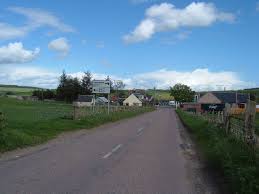
Gold has been found close to a tiny historic Scottish town.

I wish somebody had been around to blog about the local people and the history behind the famous quote, “There's gold in them their hills.” Oh, there was?

M.F. Stephenson wrote various articles on his observations of minerals, as well as mound excavations in Georgia. In the 1870s, several of his articles were published by the Smithsonian Institution, including Account of Ancient Mounds in Georgia and Mounds in Bartow County near Cartersville, Georgia. These described sites he visited and the artifacts found at each, such as mica mirrors, copper vessels, and quartz.

When the gold rush in Georgia was believed to be over, many miners headed west to join the 1849 California Gold Rush. Stephenson, mayor at the time, thought differently and in the town square proclaimed to over 200 men, “Why go to California? In that ridge lies more gold than man ever dreamt of. There’s millions in it.” Thence came Mark Twain's quote.

But back to the present. Scotland, already rich with oil and gas has just announced the possibility of a major gold find. The tiny Scottish hamlet named Towie is bracing itself for the world's next gold rush after prospectors found evidence that it sits on major deposits. Local streams have been well known for grains of gold of "significant size" for decades.

The remote community of 200 people in Aberdeenshire does not even have a shop and the school has under 20 pupils.

However, after a two-year investigation, the possible existence of gold deposits worth millions has been revealed. Turkish mining giants Koza Altin Isletmeleri and a Highland firm GreenOre are now seeking planning permission for further investigation.

The mining giants feel the area in Aberdeenshire has all the right hallmarks of a major deposit to be hiding underneath the surface. Study of the geology found some exciting rocks with potential for a large deposit.

The area is already rich in history.


Picture
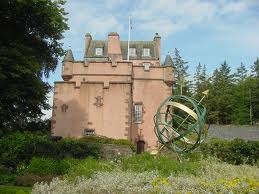
Nearby in Aberdeenshire, Scotland, the historic Towie Barclay Castle sits 4.5 miles south-south-east of Turriff. The Clan Barclay built the current structure in 1593. The site was given to the Clan in the 11th century by Malcolm III of Scotland. Following Clan Barclay's pillage of a nunnery in the 12th century, a curse was put on the male line. Belief in the curse was strong enough that it was given as a reason for the sale of Towie Barclay Castle in 1755.

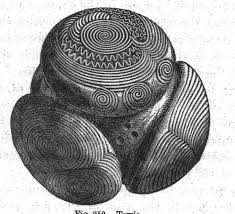
Picture below:. The exceptionally elaborately decorated ball from Towie in Aberdeenshire, dated from 3200–2500 BC

Picture
Carved Stone Balls, up to 5200 years old, date from the late Neolithic to at least the Bronze Age.

Nearly all have been found in north-east Scotland, the majority in Aberdeenshire, the fertile land lying to the east of the Grampian Mountains. A similar distribution to that of Pictish symbols led to the early suggestion that Carved Stone Balls are Pictish artefacts.

Apart from suggestions of their use as weapons, throwing balls, weights, or their weight used to aid scraping leather comes a more spiritual theory. The possible use of the balls as oracles has been suggested. The way in which the ball came to rest could be interpreted as a message from the gods or an answer to a question. The lack of balls found in graves may indicate that they were not considered to belong to individuals.

Maybe the modern gold-digging methods will reveal more ancient artifacts.

Looks as if it's never too late to find gold. Maybe I should dig deeper in my garden here in Hertfordshire, close to London in the UK. In her chariot, Queen Boadicea and her army fought their last battle against the Romans close by.

But no area lacks history. Do you know the story of your area or what lies beneath your home?


7 Comments

What can you do with obsolete technical devices?

4/24/2015

14 Comments

 
Picture
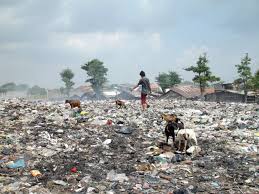
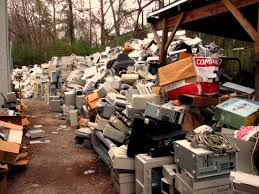
It's a growing problem. As each amazing must-have item appears on the market, we fling away the not-so-cool device without a thought of where the accumulated mass of everybody's waste products will end up.

I'm the same. When our old television broke down, my husband and I needed a new one. (I say 'need', but that's a relative term because it's neither food nor water.) But as you grow less active with age, television offers entertainment and mental stimulation. That being said, we chose a lower-priced television we could pay off with a small amount each month, and the delivery man removed our old one. I didn't give any thought to where it would go—hoped someone would strip it down and dispose of the parts with all due care about recycling.

However, campaigners claim thousands of broken televisions, computers, microwaves and refrigerators are being illegally exported to African countries and dumped gigantic landfills like Agbogbloshie in Ghana because it costs less than recycling them in their countries of origin.

41 million tonnes of 'e-waste' worth over £34 billion (51,440,682.79 USD) were discarded globally in 2014, according to a shocking report by United Nations University who claim out of the 41 million tonnes, only 6 million tonnes was recycled properly.

Some of the appliances leak toxic elements such as lead and mercury which harms the environment. Young men search amongst the broken goods and toxic fumes hoping to find something worth selling.

Picture

Apparently, recycling in the European Union and the UK costs money and people in Africa are still paying for the throw-away electrical equipment.

The waste discarded in 2014 contained about 300 tonnes of gold, 16 million tonnes of iron and nearly two million tonnes of copper as well as significant amounts of silver, aluminium and palladium. Alarmingly, it also contained substantial amounts of life-threatening toxic material like mercury and cadmium which can cause organ failure and severe mental impairment if they pollute the local water supply.

While the US and China produce almost a third of the world's combined e-waste, the top producers per-capita are the wealthy nations of northern and western Europe: Norway, Switzerland, Iceland, Denmark, and the UK.

The escalating global e-waste problem is driven by the rising sales and shortening life cycles of electrical and electronic equipment. Source: Daily Mail. 

How can we stop this problem of continually needing new and better 'things'? First, the manufacturers should make products to last. Second, we should give serious thought to the health of our beautiful world. Just imagine people in the future discovering huge areas of nothing but rusting metal and chemicals. The scenario would make an excellent plot for a novel, but this one will be real in the future. When Edith Parzefall and I co-wrote the futuristic Higher Ground series, we touched on this problem.


Click to see all five novels here.

How did you dispose of your last piece of electrical equipment?

14 Comments

Dogs are just like humans in so many ways.

4/23/2015

9 Comments

 
PictureDog driving a train?
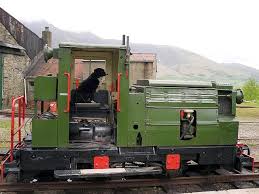
This morning in the UK, a sheepdog took control of a tractor which ended up on a busy motorway. Traffic Scotland reported the bizarre event, which caused tailbacks on the road.

The transport body tweeted: ''M74 (N) J13-RTC due to dog taking control of tractor... nope, not joking. Farmer and police at scene, vehicle in central res.''

It later emerged that the sheepdog in question was Don, who had been sitting alone in the passenger seat of his owner's farm vehicle when the farmer went to tend to a lamb. The dog must have leaned on the controls of the tractor, taking it from a field on to the road, although his owner believes the handbrake probably wasn't on tightly enough.

A road maintenance man arrived at the same time and stopped the traffic. The tractor didn't crash into another vehicle, although the windscreen shattered and Don ended up with a sore paw.

The incident led to plenty of dog puns as people responded to Traffic Scotland's tweets.

''Police investigating, so far no leads,.' & ''This is barking.'' ''Will the dog have points on his licence? Was he breathalysed? Did police arrest him?''

Although dogs can't actually drive a vehicle, dogs and humans have been living side-by-side for about 15,000 years. We are alike in many ways.

About 6 million dogs are diagnosed with cancer each year, and dogs get canine versions of rare human disorders as well.

Obedient, docile dog breeds live longer, according to research published in June 2010 in The American Naturalist. Research on the energy use, personalities, growth rates and life spans of 56 dog breeds revealed that bold, aggressive breeds lived fast and died young. They grew faster than obedient, eager-to-please breeds, and also had higher energy needs. Perhaps in selectively breeding for personality, humans inadvertently tapped into linked traits like metabolism and longevity.


Picture
Do you think dogs show guilt in those puppy-dog eyes when you scold him for the umpteenth time about his behavior? Researchers say he responding to your rebuke. When dog owners thought their dogs had eaten a forbidden treat and reprimanded them, the canines looked guilty regardless of whether or not they had actually done the deed. In fact, dogs who were wrongly accused of snack-snatching often looked more guilty than dogs who had really eaten the treat. Turns out those soulful eyes don't reflect conscience at all.

What about envy? Dogs know when they're not getting a fair shake. A study found that when dogs saw other dogs getting treats for a trick they'd been performing unrewarded, the unrewarded dogs became agitated.


Picture
We all know dogs are smart. Research shows canines are as smart as a 2-year-old child. Border collies are the top dogs in the intelligence category, with some in the breed capable of understanding up to 200 words. Poodles, German shepherds, Golden retrievers and Dobermans round out the top five smartest breeds. (The most popular breed in America, the Labrador retriever, comes in at number seven.) Older breeds like hound dogs, bulldogs and beagles are among the slow learners of the doggie world, the researchers reported. Unlike newer dog breeds designed for companionship and sociability, old breeds were bred to sniff and hunt, perhaps giving them more brawn than brain.

On the recommendation of friends, we welcomed a beagle into our family back in the late 60s. He nearly drove me made with his lack of attention span. He would run around the inside perimeter of our fence barking and showing aggressive behavior.

But our last dog, a greyhound named Tiger, showed loving restraint in all he did. Once, when walking on a lead through the forest on the opposite side of the road to our home, I tripped over tangled undergrowth. Tiger rushed back to me and begged forgiveness for pulling so hard.

He never tried to drive the car though.

9 Comments

Do home solar panels offer a bright future?

4/22/2015

15 Comments

 
Picture
Rising UK energy bills are driving more homeowners into installing solar panels on their roofs.

'Rent-a-roof’ schemes are fueling the demand. Here's how that works: Companies install the system free in return for pocketing payments for the surplus energy that is fed into the National Grid.


So far, seven out of ten homeowners have invested and only a fifth used the 'rent-a-roof' scheme.

Yesterday, I read about the completion of two floating solar power plants capable of providing electricity for 1,000 homes in Japan. The nation doubled its solar power capacity within two years of the 2011 Fukushima nuclear disaster, and is now a world leader in solar power along with China and the US. Physicists continue research on floating nuclear power plant designs using ocean water to cool the reactor in the event of an emergency. Reservoirs are also an ideal location because the panels produce shade, which reduces water evaporation and promotes algae growth.

UK solar power almost doubled in the last year, with 650,000 installations ranging from solar farms to panels on homes. However, a large fire at Hove Town Hall yesterday is believed to have been caused by an electrical fault in solar panels on the roof. There's always a chance of something going wrong.

Picture
You might think cold, dull, cloudy Britain wouldn't capture much solar energy. But cloudy days still generate power, although not as much as when there are clear skies. Also, on a partly cloudy day, it’s possible to generate more than usual. Known as the edge of cloud effect, this phenomenon happens when the sun passes over the outer side of a cloud, magnifying the sunlight.

Germany gets only about as much sunshine as the state of Alaska, but Germans have successfully installed about 25 gigawatts of solar power– half of the entire world’s supply.

In the US, Portland, Oregon is known for its rainy, dreary winters, gets as much sunshine as the average U.S. city. Slightly cool weather is an advantage for solar panels because of the electronics inside. In a city with extreme summer heat, solar is a little less efficient, which is part of the reason why solar panels in cloudy San Francisco can actually produce more power over a year than the slightly sunnier, hotter city of Sacramento.

I dread to think what our power bill will be this year here in Hertfordshire, England. My husband has lost so much weight with his illness that he needs a heated environment to stop shivering, and turns the gas fire on every night, despite the Spring temperature rise. Although I'd jump at the chance, we couldn't rent-a-roof because a nationwide Housing Association owns our property. Just imagine the headache they would have keeping track of all their households' comings and goings.

How about you? Do you think solar panels are the future? Would you consider installing them?


15 Comments

The divide between a boy and a girl's role in life.

4/21/2015

10 Comments

 
Picture
The UK Royal baby girl could be worth £1 billion to the economy over its lifetime. A girl? Hooray for women. If born today, he or she will share a birthday with the 89 year-old Queen.

So, why would a girl be more beneficial to the country? As well as the boost to baby clothing sales, a Princess would be able to establish trends throughout her life, which will be great for the people who design her clothes and those who can make look-a likes.

Meanwhile, just one in ten authors can earn full-time living from writing. Of those, women were found to earn 80 per cent of the income of their male counterparts in a study conducted by Queen Mary, University of London.

Oh, dear. Back to the old male-female divide, with women the losers.

Writing is not the dream job people think. The new report highlights the low earning many endure for their art. Only one in ten authors can afford to earn a living from writing alone, a drop from 40 per cent just a decade ago. A typical professional writer earned less than the minimum wage.


Picture
The Authors’ Licensing and Collecting Society highlighted a top-heavy market, with just five per cent of authors earning 42.3 per cent of all income from professional writers, and a struggle for those working in non-fiction and academia.


The bleak picture, compiled from a survey of nearly 2,500 writers, has been attributed in part to the changing publishing world, which sees houses less willing to take a chance on new authors and more likely to commission “safe bets” and celebrity writers.

A remarkable 17 per cent of all writers did not earn any money in the year in question, 2013, despite 98 per cent having work published during the period of shortly before.  Source: The Telegraph. 

My husband constantly points out that publishing houses sell paperback books for 1/3 of the price of mine. I explain that a large quantity is cheaper to produce and they're probably making a loss to get the novels in front of the public. Mine are released by small publishers with no fringe benefits.

Writing fulfills a need in me—I live to write. I'm going through a process of editing my next fantasy at the moment. Several more first drafts of novels sit in files waiting for further work.

Take that occupation away from many older people and their life would serve no purpose. What would I do with my vivid imagination? Things would be different if I had family around me, grandchildren to tell stories to, teens to advise and adults to settle differences between.

So—before you set out on a writing career, work out your aim. You can't count on earning money.

Be you a prince, princess or writer, a working person or stay-at-home parent, how does the balance between male and female affect you?


10 Comments
<<Previous

    Author

    Francene Stanley
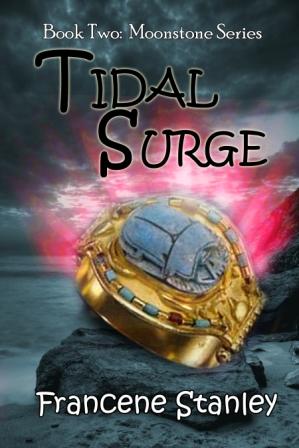
    From England, I use news items in my novels which you can see below, all linked to an Amazon near you.

    Picture
    Picture
    Picture
    Picture
    Picture

    Archives

    March 2016
    February 2016
    January 2016
    November 2015
    October 2015
    September 2015
    August 2015
    July 2015
    June 2015
    May 2015
    April 2015
    March 2015
    February 2015
    January 2015

    Categories
    news
    earth
    sea
    space
    environment
    people
    animals
    fish
    birds 

    experience 
    writing
    novels

    All

    RSS Feed

Powered by Create your own unique website with customizable templates.